
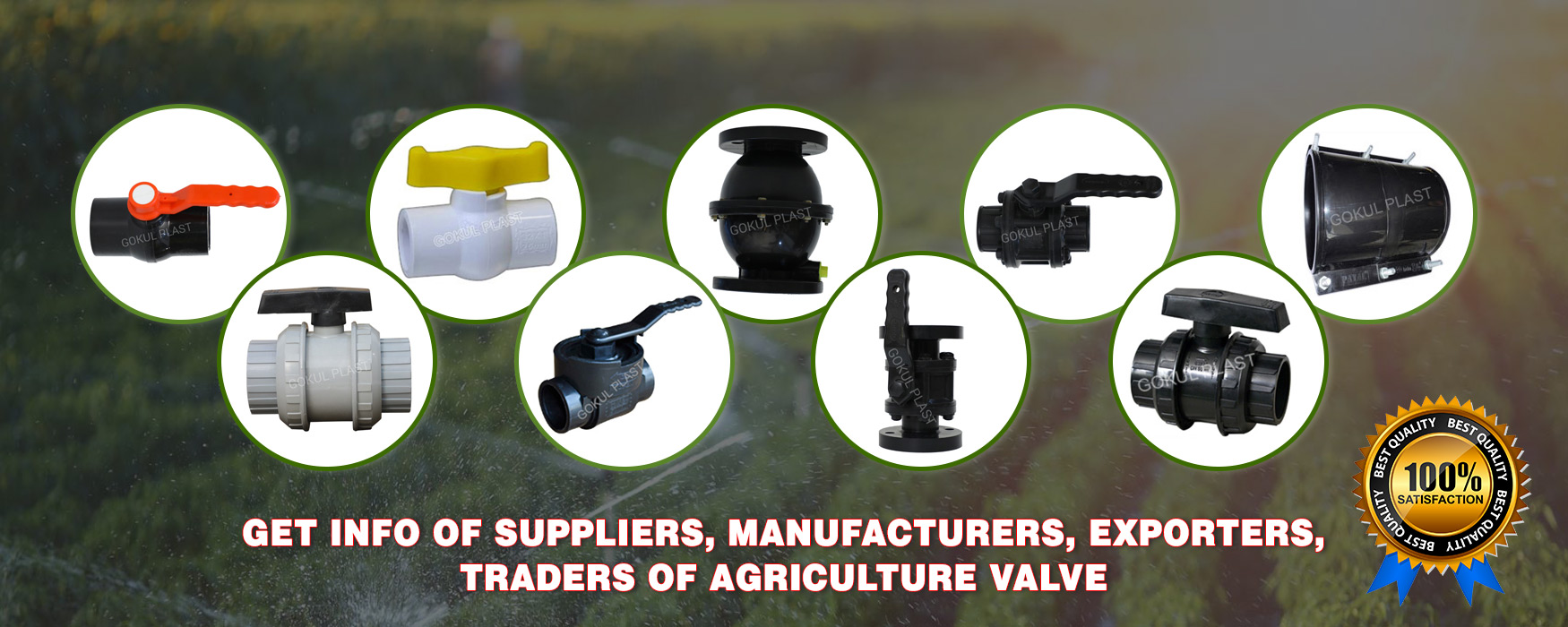
We are one of the most prominent manufacturers, suppliers and exporters of agriculture valves, providing quality in terms of both materials and durability with regard to the irrigation and farming needs that are required by modern agriculture. At Paramount India we have a complete spectrum of agriculture valves that is designed with the latest technology along with the premium quality of materials that make it perform well even under extreme climatic circumstances. Our valves can be used to regulate flow control and effective dispersion of water, whether in a drip irrigation system, a sprinkler system or a flood irrigation system, and in this way farmers are assured of maximising water use and enhancing crop productivity.
We are a reputable manufacturer of valves in the agricultural sector, and as such, our valves range vastly, with the most common being ball valves, foot valves, air release valves and gate valves so that they can withstand changes in pressure and exposure to chemicals that are commonly utilized in the agricultural field. Quality checks on each valve are cumbersome in order to ensure quality as per industry requirements and to provide a good operation throughout the year. The ease of maintenance and installation in our products also lowers downtimes and promotes maximum efficiency in agricultural purposes because the products are durable and ready to use.
We have a good market both locally and internationally, and we are therefore proud to be a global supplier and exporter of agriculture valves to our customers in Asia, Africa, the Middle East and other parts of the world. We are also dedicated to innovation and customer satisfaction; hence, we are the choice partner of farmers, irrigation contractors, and distributors of agricultural equipment across the globe. Select our agriculture valves to be reliable and to perform cost-effectively and with a consistent quality in each drop.
Benefits of Agriculture Valves
- Effective Water Management: Water movement can be precisely controlled and regulated and it minimizes the wastage of water.
- Better Crop Yield: Ensures that there is even distribution of water to enable maximum growth of plants.
- Durability: It is made of materials where corrosion will not occur such as PVC, brass or stainless steel and can be used in the outdoors.
- Simple Design and easy installation and maintenance: Simple design ensures that it is easily installed and has minimal maintenance.
- Cost-Effective Solution: It lowers the cost of operation by automatic control and low leakage.
- Pressure Control: Keeps the pressure at the same level and avoids the damage of the irrigation systems.
- Automation Cross-compatibility: Is capable of being connected with smart irrigation systems to be controlled remotely.
- Flexibility: Could be used in drip and sprinkler irrigation systems.
Applications of Agriculture Valves
- Drip Irrigation Systems: To regulate the flow and the pressure of the individual drip lines.
- Sprinkler Irrigation: Control distribution of water over big farmlands.
- Greenhouses & Nurseries: Keep water under control in case of sensitive plants. Fertilizer mixing units Fertilizer mixing units are used in fertigation systems where water and fertilizers are mixed efficiently.
- Water Tanks and Pumps: Control the supply of water in and out to maintain supply.
- Filtering Systems: Control the flow in the course of backwashing and filter cleaning.
- Hydroponic Farming: Regulation of flow and distribution of nutrient solution.
- Livestock Farms: This is applied to water supply lines to feed animals.
Process of Using Agriculture Valves
- Selection: Choose the appropriate valve type (ball, gate, butterfly, solenoid, or check valve) based on system pressure and flow requirements.
- Installation: Connect the valve to pipelines or irrigation systems using suitable fittings and seals.
- Calibration: Adjust flow and pressure levels as per crop and soil needs.
- Automation (Optional): Connect to a timer or smart controller for scheduled or sensor-based operation.
- Operation: Open, close, or partially adjust valves to regulate water or nutrient flow.
- Maintenance: Regularly inspect for leaks, clean filters, and lubricate moving parts if required.
- Replacement: Replace worn-out seals or damaged valves to ensure efficient performance.